> For the complete documentation index, see [llms.txt](https://documentation.crossengage.io/llms.txt). Markdown versions of documentation pages are available by appending `.md` to page URLs; this page is available as [Markdown](https://documentation.crossengage.io/data-and-engagement-platform/messages/integrations/channels/direct-mail/optilyz/create-a-campaign-message.md).
# Create a Campaign Message
## Using optilyz in a Campaign
* Log in to your CrossEngage account.
* Go to `Campaigns` and click `Create new campaign` in the top right corner.cam
* Choose whether you want to create an Audience or a Realtime campaign.
* Once you have created your campaign and filled in the “Campaign setup” and “Target group” sections, go to the `Messages` section and click `Create new message`.
* Select `Direct mail` from the dropdown menu. The message setup screen will open
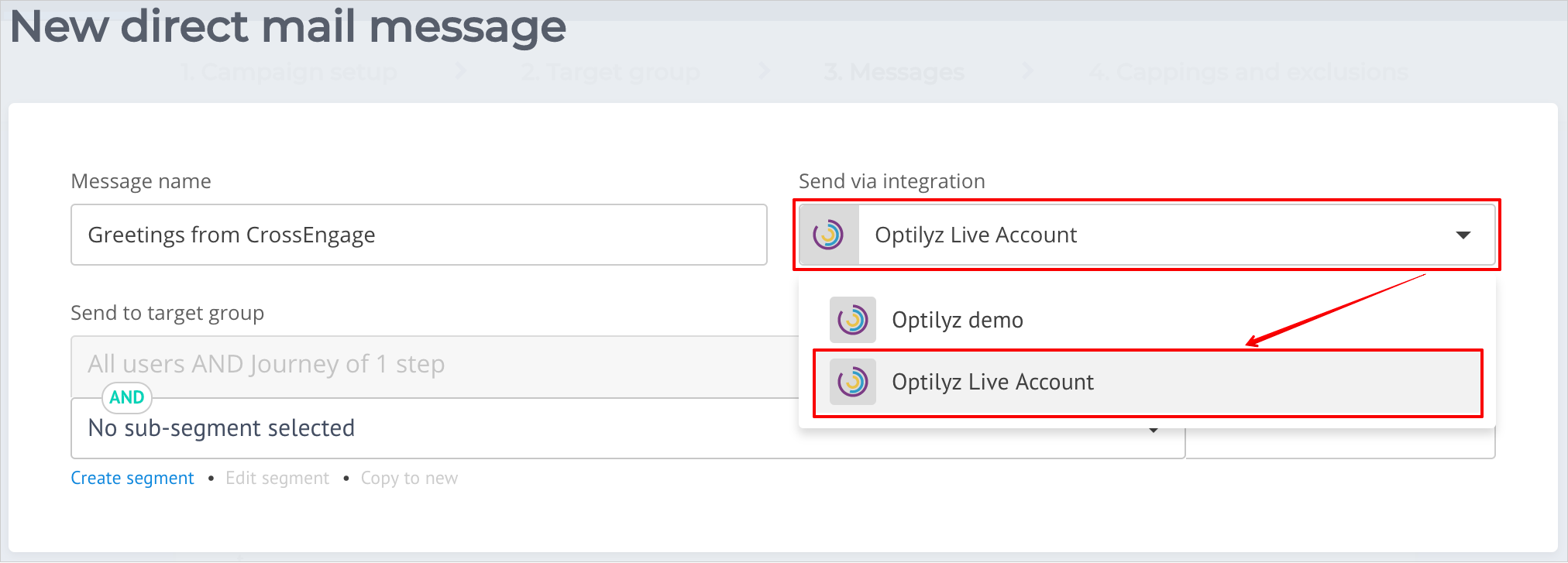
* Under the “Send via integration” heading, select the optilyz integration that you set up earlier.
## Automation
* To fill in the Automation field, you will need to have a created Automation in optyliz.
* If you have created automation(s) choose the one you want and skip the following section. If you do not have any yet, follow the steps in the section below.
## Creating an Automated Mailing in optyliz
{% hint style="info" %}
CrossEngage only displays automations that are Live in your optilyz account.
{% endhint %}
* Log in to your optilyz account.
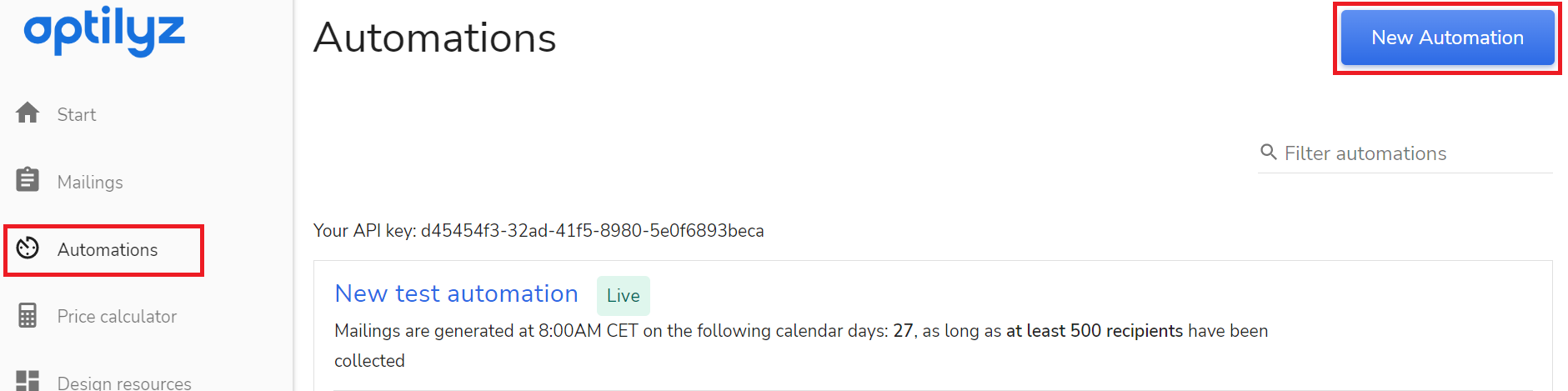
* Go to `Automations` in the left panel menu.
* Click`New Automation` in the top right corner of the page.
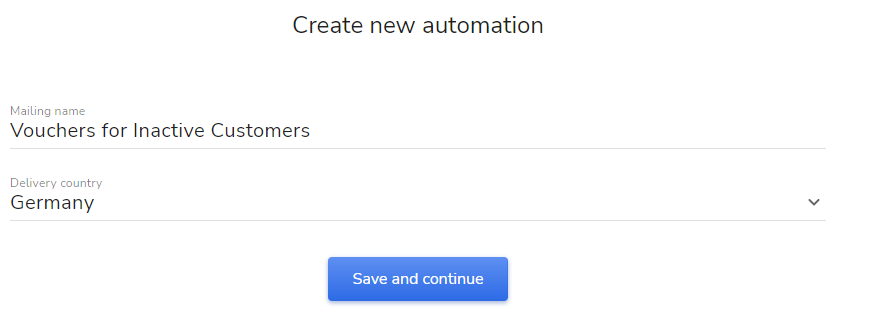
* Give the automated mailing a descriptive name so that you can easily identify it later.
* Choose the delivery country.
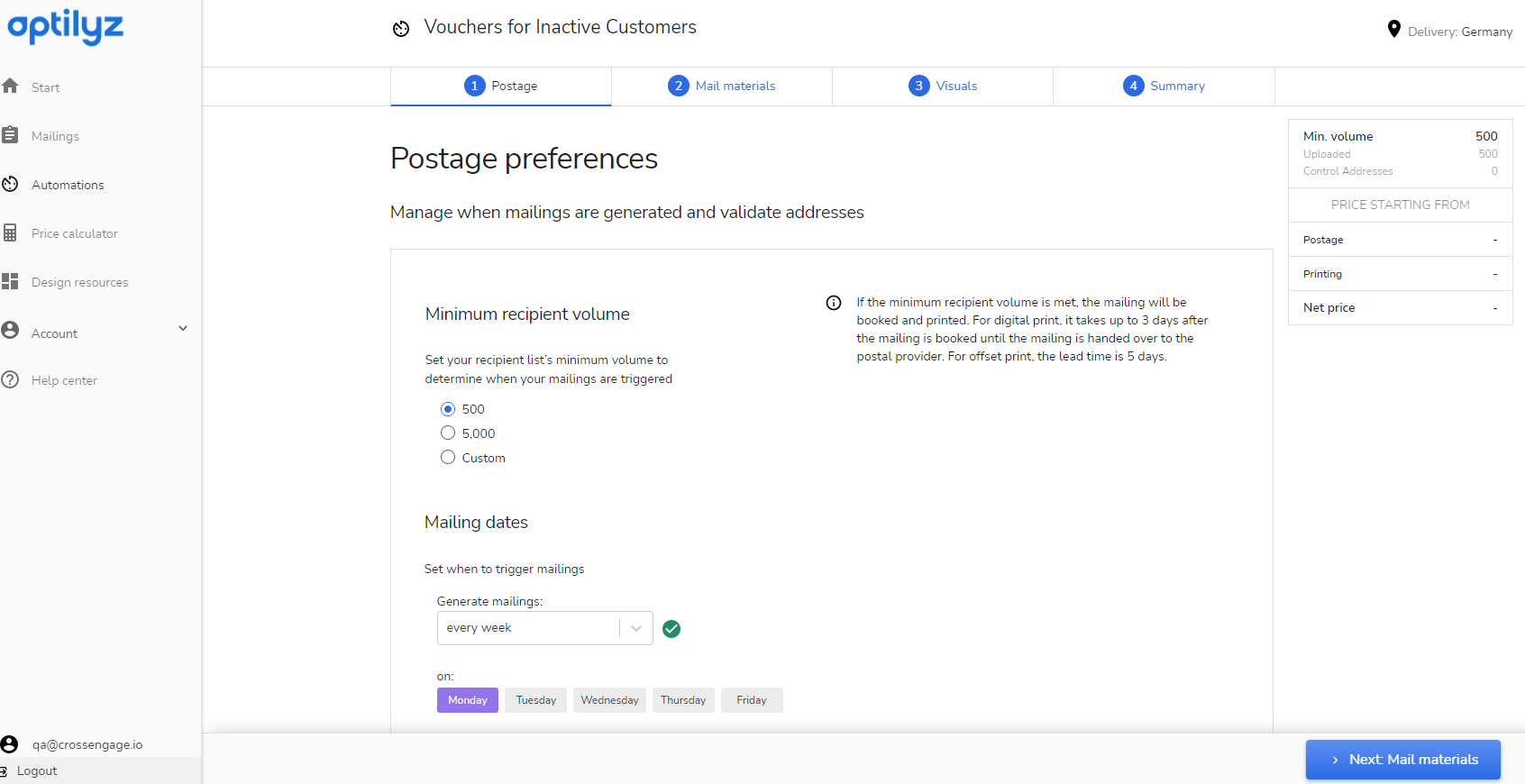
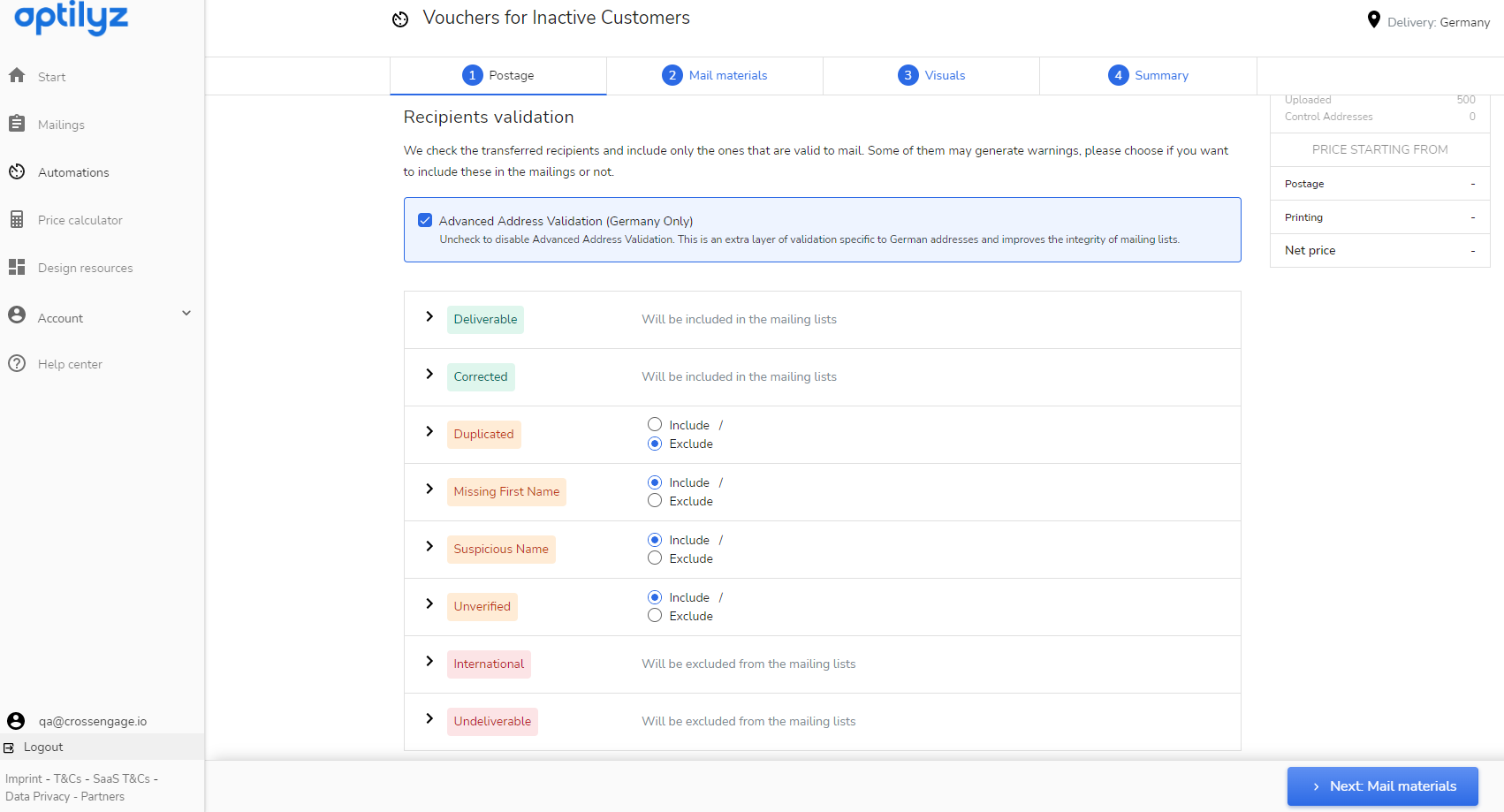
### 1) Postage
* Mailings are created on a minimum volume basis. Select the minimum recipient count to send out a mailing.
* Set mailing dates. By default, mailings can be created on any business day.
* Choose whether Optilyz should include or exclude unverified or duplicated addresses, suspicious names or missing names in mailings.
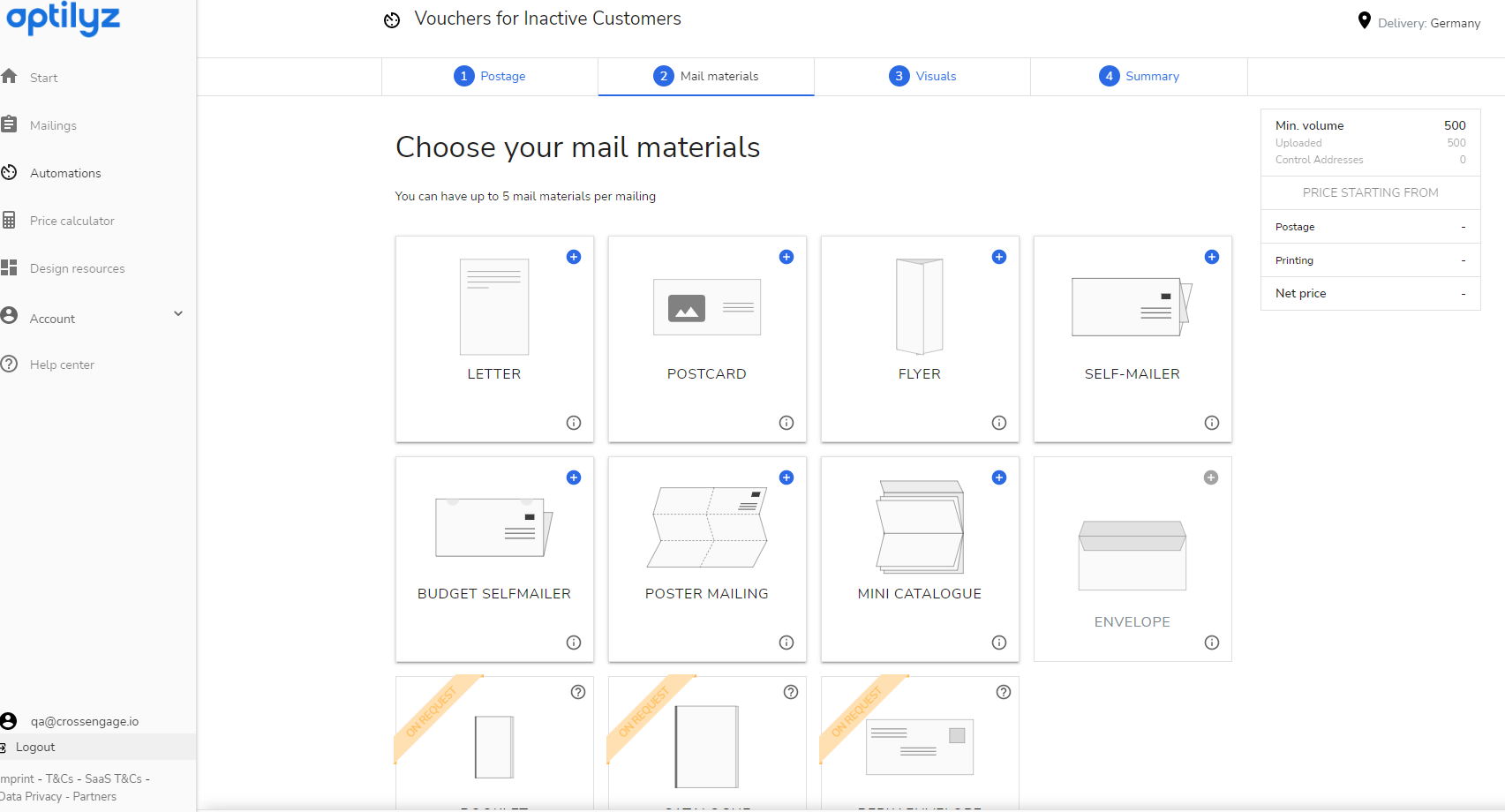
### 2) Mail Materials
* Select the mail materials that you would like to use.
* After selecting all mail materials, click `Save and Configure`.
* Set the configuration of each mailing material by clicking `Review Configuration` and then choosing the right format, grammage, material, number of pages, color mode and personalisation.
* When ready, click `Confirm`.
{% hint style="info" %}
You can learn more about the optimal configuration of your mail materials by hovering your cursor over the information icon beside each title within the configuration, or by reading [this article](http://help.optilyz.com/en/support/solutions/articles/43000493682-which-formats-does-optilyz-offer-).
{% endhint %}
### 3) Visuals
* Upload your final design of the mailing material. Leave the personalisation and address fields blank.
* Add a voucher code if you wish (see the next section).
* Upload a final design in a similar fashion to the first step, but this time fill in the address and personalised data to show optilyz how to print them. Learn more about personalising your designs [here](http://help.optilyz.com/en/support/solutions/articles/43000493959-how-do-i-personalize-my-designs-).
### Voucher Codes
* Choose whether you want a
* **Personalised Voucher** - each customer receives a unique voucher.
* **Non-Personalised Voucher** - all recipients receive the same voucher.
#### Setting up a Personalised Voucher
* To add a Personalised Voucher, you need to have a voucher pool set up in your CrossEngage account. To set up a voucher pool go to `Settings` > `Vouchers`. [Learn here](/data-and-engagement-platform/messages/vouchers/creating-vouchers.md) how to set up the voucher pool.
* Once the voucher pool is set up:
* Copy the name and paste it into the `Voucher pool name` line.
* Click `CONTINUE` and `SAVE`.
#### Non-Personalised Voucher
* Insert the Voucher Code.
* Click `SAVE`.
### 4) Summary
* Double check that everything is set up to your specifications.
* Click `ACTIVATE`.
* Select the created Automation in the CrossEngage campaign message.