> For the complete documentation index, see [llms.txt](https://documentation.crossengage.io/llms.txt). Markdown versions of documentation pages are available by appending `.md` to page URLs; this page is available as [Markdown](https://documentation.crossengage.io/predictions-platform/overview/selections-tab.md).
# Selections Tab
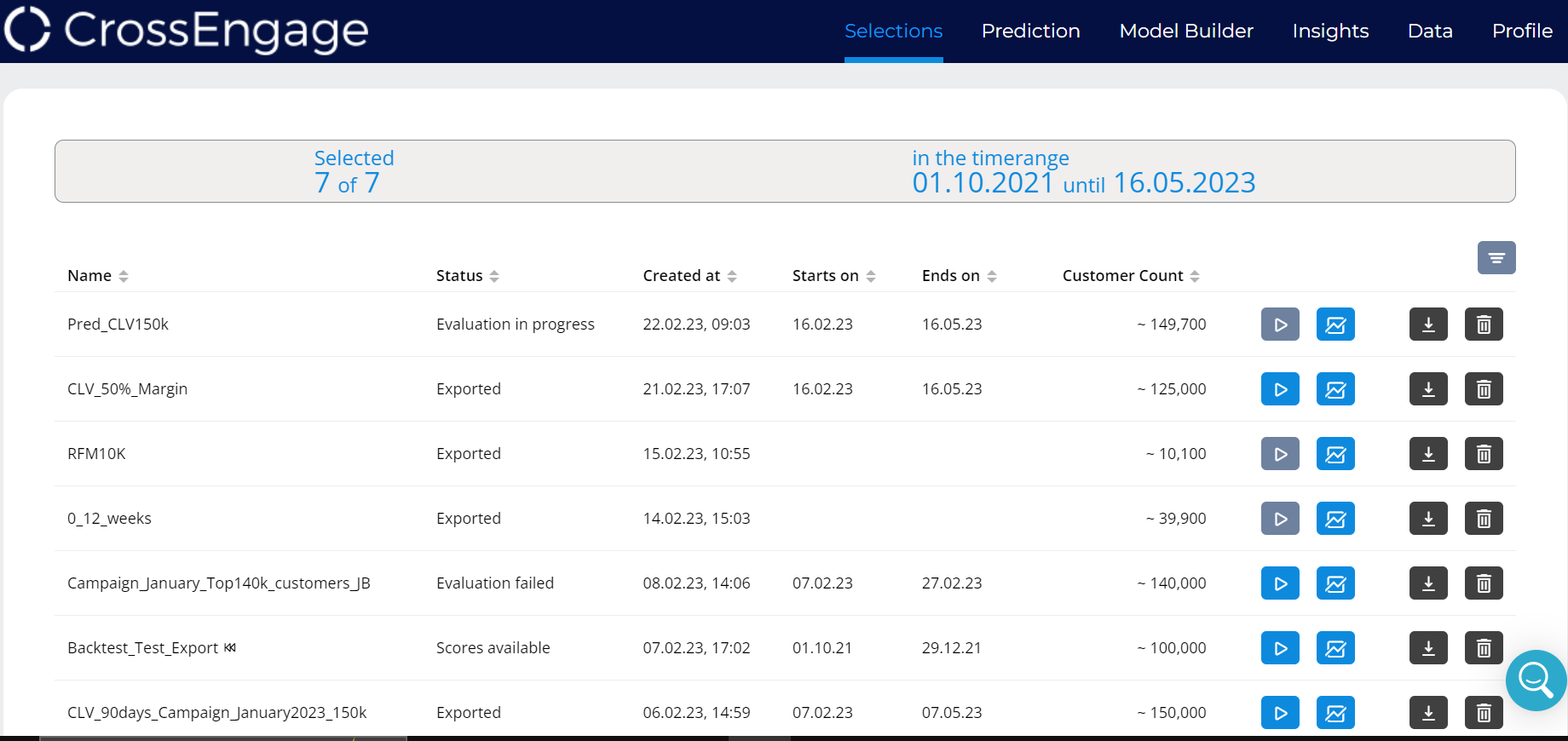
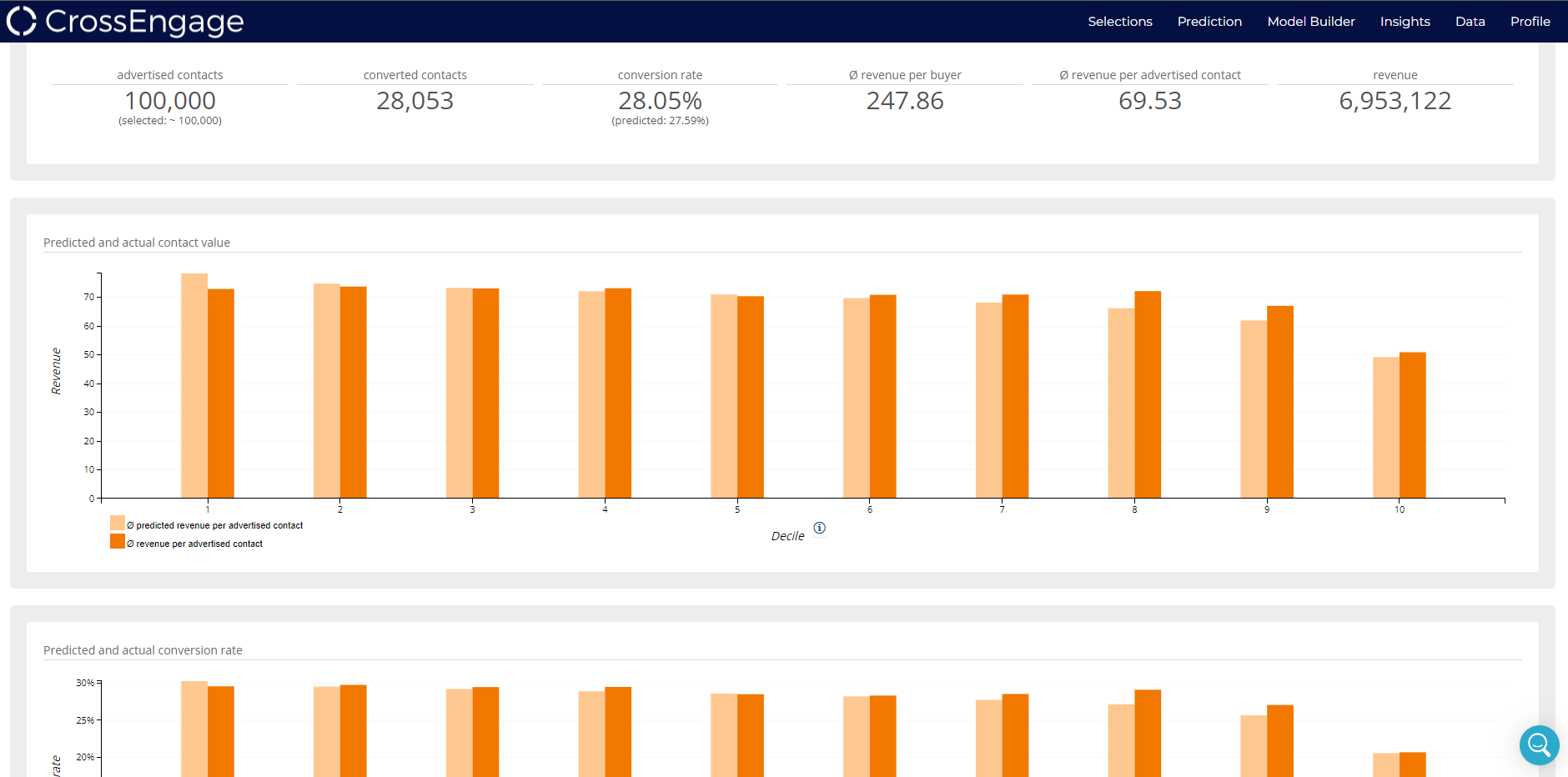
The Selections Tab summarizes all Selections that have been exported, along with Evaluations; How the Campaign performed compared to the Predictions.
### How to Use the Selections Tab
Click on the Selections Tab at the top of your screen. On the Selections page, you can see a list of Selections with their Customer Count and relevant dates.
You can also see Status Information of the Selections. When a Selection is first created, its Status shows "Exported". You can now click on the blue Run button to mark the Selection as Sent, and begin Evaluation.
To evaluate a Campaign, first wait until the Time Horizon for the Campaign has elapsed. This is the same time period entered in the Model Builder, in which Customers are expected to convert after the Print Campaign. Once the time horizon has elapsed, you can upload data for the time period. CrossEngage creates an Evaluation, comparing the actual results of the Campaign to the Prediction. Click on the Evaluation button to see the Evaluation Report.
{% hint style="info" %}
The Evaluation is shown in Deciles. A Decile is one-tenth of the entire Selection.
{% endhint %}