> For the complete documentation index, see [llms.txt](https://documentation.crossengage.io/llms.txt). Markdown versions of documentation pages are available by appending `.md` to page URLs; this page is available as [Markdown](https://documentation.crossengage.io/data-and-engagement-platform/messages/integrations/channels/email/mailgun/create-a-campaign-message-with-mailgun.md).
# Create a Campaign Message with Mailgun
* Log in to your CrossEngage account.
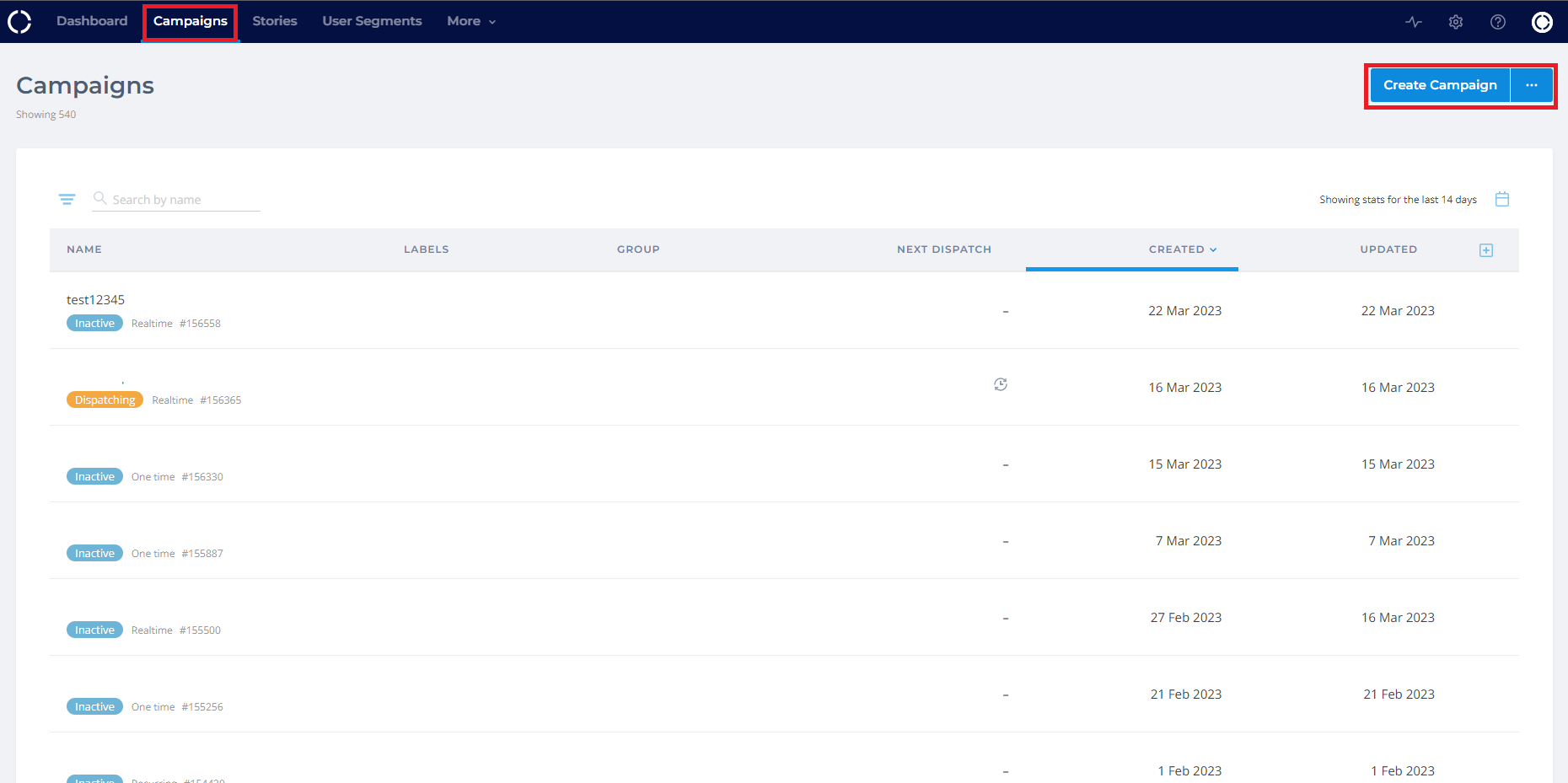
* Go to `Campaigns` and click `Create new campaign` in the top right corner of the page.
* Choose whether you want to create an Audience or a Realtime campaign. Information about the distinction between these types of campaigns found [here](/data-and-engagement-platform/campaign-management/campaigns.md).
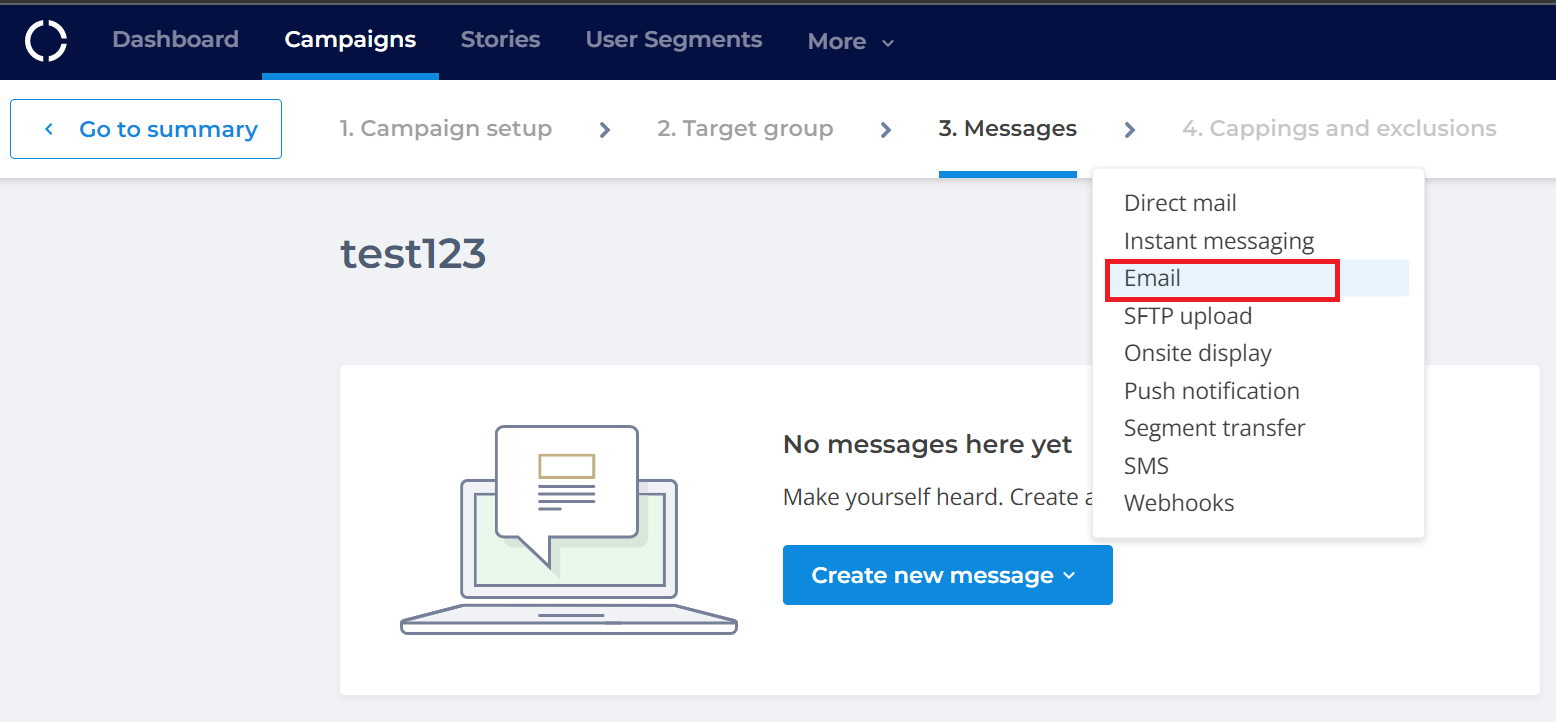
* Once you have created your campaign and filled in the “Campaign setup” and “Target group” sections, go to the `Messages` section and click `Create new message`.
* Select `Email` from the dropdown menu. The message setup screen will open.
* Under the “Send via integration” heading, select the Mailgun integration that you set up earlier.
* Fill in the Sender Information:
* “Sender email address” - the address from which the email will be sent;
* “Reply-to email address” - the address where replies will be sent to;
* “Sender name” - the name of the message sender.
* Create a message template, for which [Handlebars ](/data-and-engagement-platform/messages/personalization.md)may be useful.